

Don't Call It a Crisis
What Society Calls Collapse Might Actually Be Your Awakening

The Cultural Reframe
I recently came across a clip of Issa Rae at SXSW, where she talked about how many of her friends—particularly women between the ages of 37 and 42—seem to be going through what she called a “female midlife crisis.”

Career changes. Life pivots. Burn-it-down energy.
It struck a nerve—not because it felt untrue, but because of how loaded that phrase is.
“Midlife crisis.” It implies instability. Meltdown. A loss of control.
But Issa wasn’t judging. She was naming something real—using the language society has ascribed to it.
We’ve all seen it before: a person makes a major life change, and the reaction is some version of, “Whoa, what’s going on with them?”
Or worse: pity, judgment, that condescending “oh, they’re figuring it out” energy.
But what if it’s not a crisis?
What if it’s a reckoning?
What if it’s clarity?
What if it’s not a collapse—
But the beginning of an awakening?
My Personal Lens
I couldn’t help but feel seen—and slightly offended—at the same time.
Not by Issa, but by the language society has chosen to describe this chapter of my life.
At 38, I’ve made one of the most significant pivots of my career.
I walked away from a role (and income) I worked for years to earn, left an industry I had long been defined by, and began building something entirely new—from the ground up, and on my own terms.
Not because things were falling apart.
But because they no longer fit.And that distinction matters.
This wasn’t a breakdown.
It was a breakthrough.
But as we’ve discussed, that hasn’t made it easy. And apparently, that’s not just personal.
Adult development psychologists like Robert Kegan describe this chapter as a shift into self-authorship—when fulfillment is no longer about meeting inherited expectations, but aligning with your own values.
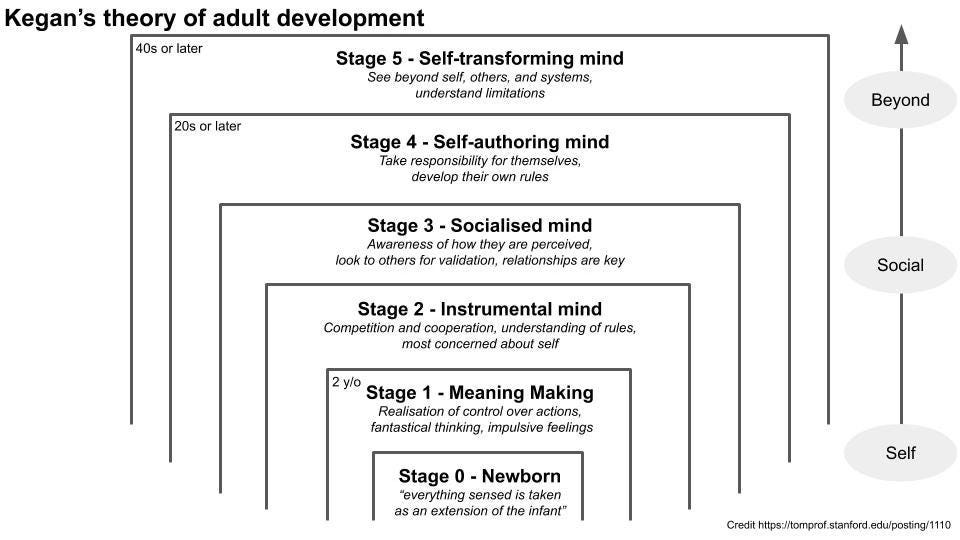
It’s a transition many of us feel, even if we don’t have language for it.
Economists have studied this too: research on the U-curve of happiness shows that well-being tends to dip in our late 30s and early 40s before rising again. Not because life gets easier, but because we stop performing and start asking better questions.
And yet, when we try to name what we’re experiencing—most of the language we’re handed doesn’t even come close.
How Language Shapes Our Perception
Today, we throw around terms like “midlife crisis” as if they’re neutral.
But they’re not. They’re coded.
And often, they’re designed to shame.
“Baby blues.”
“Empty nest syndrome.”
“Finding herself.”
“Late bloomer.”
“Career comeback.”
These phrases are rooted in a culture that fears personal evolution—especially when it’s happening in women.
They reduce complex emotional transitions to instability.
To clichés.
They pathologize change.
And they frame awakening as loss.
But let’s take a page out of our own history books with a simple reframe:
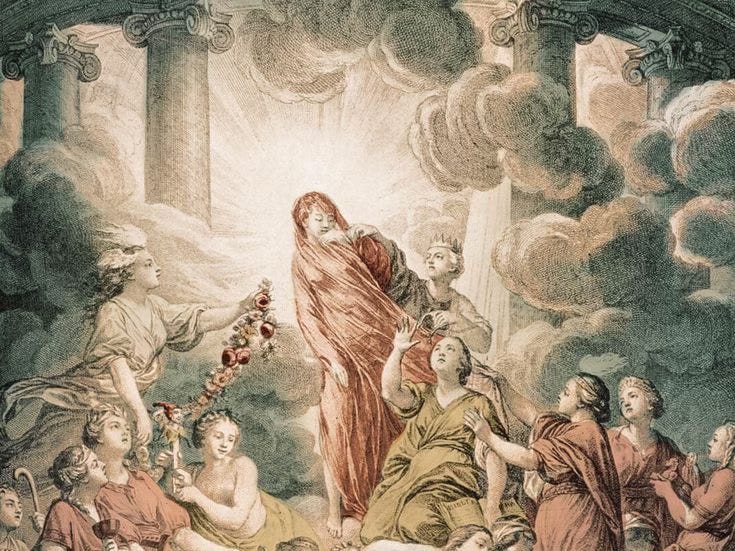
The Enlightenment gave way to the Renaissance.
First came the questioning.
Then came the art.
The reinvention.
The boldness to create something new—not despite the questioning, but because of it.
What if this season of discomfort, clarity, and reevaluation isn’t something to hide—but something to honor?
What if it’s the prelude to your most aligned chapter yet?
So, for example, when we describe a person leaving a career they’ve spent years building as “blowing up their life,” we ignore what may really be happening:
A return to self.
A realignment of priorities.
A redefinition of success.
That’s not crisis.
That’s clarity, baby.
From Awareness to Action
Last month, I wrote about the ego—the stories we’ve been told (and sold) about what success should look like. And the deep unlearning required to reclaim your own blueprint.
Because finding alignment isn’t a lightbulb moment.
It’s a practice.
It’s the quiet, often uncomfortable work of turning inward—and staying there long enough to hear what actually matters.
This month, I’ve been sitting with what comes next.
You’ve taken inventory.
You’ve admitted that something no longer feels right.
Now what?
The next step may be even harder:
Letting go of what no longer serves you.
Not recklessly.
Not reactively.
But with full awareness that something has expired.
And here’s the rub:
If you do this work without the tools, it can look like chaos.
It can look like crisis.
It can look like “someone blowing up their life.”
Not because they’re reckless—but because they’re under-resourced.
Or maybe they waited too long to act on that voice inside (i.e. burnout).
But with the right support, with the right tools?
You don’t spiral.
You (re)build.
If You’re Here, You’re Not Alone
If you’re in that season—
Questioning what you’ve built to date,
Craving more meaning,
Or simply noticing that inner voice growing louder—
Know this:
You’re not falling apart.
You’re waking up.But remember: it’s your job to listen.
And anyone who tries to shame your evolution
is projecting their fear of change onto your growth.
Let them call it a midlife crisis.
You’ll know it for what it really is:
your very own enlightenment.
One Thing I’ve Learned: Don’t Accept Society’s Labels as Your Truth
The language we use with ourselves matters.
When we call it a crisis, we brace for chaos.
But when we name it what it truly is—a breakthrough, a reclamation, a reorientation—we create space to meet it with strength instead of shame.
Your 963 Prompt
What are the “crisis moments” in your life that were actually clarity moments?
If you reframed them as turning points, how would the story of your life shift?
Tools & Resources This Month
Book: “The Evolving Self” by Robert Kegan - A foundational piece on adult development theory. Kegan outlines the shift from socialized identity (living by others’ expectations) to self-authorship (living by your own values). Required reading for anyone sensing they’ve outgrown the life they built.
Podcast: Second Life with Hillary Kerr: Candace Nelson, Founder of Sprinkles Cupcakes & Pizzana – A former investment banker turned bakery pioneer, Candace shares how she traded spreadsheets for spatulas and what it really takes to start over, reimagine your path, and build something that reflects who you are now.
Practice: Each night this week, take five minutes to reflect:
What felt aligned today?
What felt like an old version of me?
What’s one thing I want to release tomorrow?
Mindset Shift: Your transition isn’t a failure of the plan. It’s proof you’re ready to stop performing and start aligning.
Small awareness creates big change.
Looking Ahead
Next month, I’ll continue exploring what it means to rebuild—how to act on your clarity without burning down the things you still care about.
Because growth doesn’t always require destruction.
But sometimes, it asks us to clear space—deliberately, intentionally—for what’s next.
Until then:
Stay with the questions.
Let go of the shame.
And give yourself permission to evolve—on your terms.
More soon,
Jamie
Cue Talking Heads.